Easy Death – a classic in the death and dying field

Book review of Easy Death, by Adi Da Samraj (Da Free John)

As a longtime hospice worker I’ve made a habit of reading everything I can find about death and dying. The psychologically-oriented books on bereavement and mourning are interesting and even helpful, but most of them presume that death is just annihilation. The religiously oriented books are more hopeful but, to put it bluntly, most of them are filled with nonsensical dogma.
I know for a fact that death isn’t annihilation because even after people die you can feel their spirit in the room. In little, out-of-the-way spiritual bookstores I’ve found several small, pretty marginal books that acknowledge this fact and attempt to describe what happens to a person AFTER they die. But none of them really speak with the authority of the two best books on the entire subject of death and dying, Sogyal Rinpoche’s The Tibetan Book of Living and Dying and Adi Da Samraj’s Easy Death. The good Rinpoche’s book is very good indeed and I got a lot of out of it. But Adi Da Samraj’s book is of another order entirely.
Adi Da is an American spiritual master who literally accompanies his own devotees through the death process (the book contains some amazing stories about this). Most importantly, he addresses every important aspect of the death and dying in a language that we ordinary mortals can understand, offering us clear, absolutely usable advice that I’ve never seen anywhere else.
You really can and should know what happens after death, and this book will tell you. I’ve been employing Adi Da Samraj’s wisdom in my hospice work for a few years now and it’s just totally changed the outcome for those who have died right in front of me—as well as for their families, and even for me. It turns out that what you need to know about death is exactly what you should know about life as well. I don’t know who this man is or where he came from but they ought to give him a medal for this book.
—Will Knoblock, Hospice Worker

Posted in buddhism, care giving, care giving, care giving, death and dying, end of life care, hospice | Comments Off on Easy Death – a classic in the death and dying field

What, really, is an altar?

We all know what an altar is…we set them up as places for the performance of sacraments or to pray. But I recently stumbled on a description of altars that widened my view of what they are and what they might be used for…and thought I would post it for you:

What’s an altar?

     Most domestic altars function as demarcations of sacred space, according to the various ways the idea of “sacred” might be construed in a society. It is where we intend to access higher spaces, the divine, the sacred, unity or higher guidance. It can be used as a centering device to slow down and access again a space of going with the flow, open heart and compassion. Some altars have a specific function, for example an altar specifically created for the purpose of readings.
     One could call it a focusing device, a space where one approaches with a certain intention and attention to access other than what is called “normal”, beta brain consensus reality of the human primate, namely the states associated with alpha and theta brainwaves.
     Particularly in India, the cosmic significance of the altar was fully explored. The ancient sages saw its different parts as representing the various sections of the universe and concluded that its construction was a repetition of creation.
    Basically anything you set up for the purpose can function as an altar.
    Certain items are often used to define the space and function of an altar, others for focusing energy and create space, and invocation of higher vibrational spaces and beings. One of the most important conditions for accessing altered states of consciousness is the suppressing of beta brain waves. This can be induced with the help of sounds, smells, moods, meditation, relaxation techniques and through the beta blocker spirit radio.
     Below please see a list of available items for your altar.
Altar Cloth
Candles
Incense
Spirit Guides
Bells or other sounds
Beta Blocker Spirit Radio
Meteorites
Prayer beads or Malas
Thangka
Sacred Invocational Objects and Symbols
Charms
     All these aim to aid in the accessing of different vibrational spaces, creating an atmosphere where the supernatural, other dimensions and altered states of consciousness become accessible.
     An altar also often holds pictures of spiritual leaders and teachers, flowers, statues, fabrics, crystals, gemstones, feathers, bowls of water and/or rice. Anything you hold precious and honor as divine is an appropriate item to put on your altar.
     It is not necessary to take drugs to have an experience of breakdown of barriers to other realities. Altered states experiences can be accessed with practice. It serves one well to have some experience in grounding and getting back to consensus beta brain reality.

– EJ Gold
To see a schematic of an altar space as envisioned by Mr. Gold please visit Idhhb.com

I will be posting more about altars including showing a video of an altar set up by my co-author Patricia Elizabeth in the upcoming weeks.

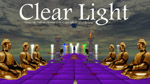
Posted in buddhism, buddhism, care giving, care giving, care giving, catholic Prayer, death and dying, end of life care, spiritual care, spiritual care | Comments Off on What, really, is an altar?

Recreating a 1950’s village street for residents with dementia

A stimulating village environment for those with alzheimers dementia has been recreated in a nursing home in Bristol, UK. Seems like a pretty cool idea…and it shows that the administrators and staff care enough to make this kind of effort for the residents. Thank you care providers!

Posted in aging, alzheimers, alzheimers, care giving, care giving, care giving, dementia, dementia, elder care, eldercare, memory care, nursing homes | Comments Off on Recreating a 1950’s village street for residents with dementia

Dr. Rhodes’ Caregiver Tips

I really like Dr. Linda Rhodes’ website…especially the Caregiver Tips. This is practical and immediately useful info for caregivers. Check out the sections about Medicare, especially the inpatient vs. observation status. Because I work in hospitals I can attest that this observation status boondoggle is becoming more and more prevalent these days, and the adverse drug effects section is incredibly important as well!

This web site is the companion piece to Dr. Rhodes’ books. “The Essential Guide to Caring for Aging Parents,” shows you how to communicate with loved ones on difficult caregiving issues and how to navigate the world of eldercare. It’s chock full of easy steps, practical advice and personal stories.

At Caregiver Revolution, we cover the world !


Posted in aging, care giving, care giving, care giving, caregiver stress, caregiver stress, caregiver support, caregiving, caregiving, living will, senior citizens, stress relief exercises | Comments Off on Dr. Rhodes’ Caregiver Tips

Holistic Health Fair at Elting Library, Sunday Sept. 9

Caregiver Revolution will be featuring a lot of new tools for caregivers at the Elting Library Health Fair. Hope that you get a chance to stop by!

Posted in aging, care giving, care giving, care giving, caregiver, caregiver stress, caregiver stress, caregiver support, caregiving, end of life, end of life care, Energy Healing, home care, prosperity path orb, stress relief exercises | Comments Off on Holistic Health Fair at Elting Library, Sunday Sept. 9

Caregiving Redefined, Article from Poughkeepsie Journal about Caregiver Revolution

We would really like to thank Marji Yablon for her informative and incredibly well written article about Caregiver Revolution that was featured in last Sunday’s Poughkeepsie Journal:  Caregiving Redefined

Posted in care giving, care giving, care giving, caregiver stress, caregiver stress, caregiver support, caregiving, end of life, end of life care, hospice care, spiritual care | Comments Off on Caregiving Redefined, Article from Poughkeepsie Journal about Caregiver Revolution